
Leading in the era of AI: How Microsoft’s platform differentiation and Copilot empowerment are driving AI Transformation

Microsoft Copilot logo illustration

A Copilot on every desk, every device and across every role is core to Microsoft’s mission to empower every person and every organization on the planet to achieve more. By bolstering the services customers know and love with our Copilot capabilities across the Microsoft Cloud, we are enabling zero-shot innovation — the ability to effectively gain value out of the box — for their businesses to increase productivity, creativity and inclusive collaboration. ISVs, digital natives, startups and the rest of our partner ecosystem are leveraging our Copilot stack to build AI solutions that are reshaping business processes across industries. We continue co-innovating directly with customers on our open cloud platform to bend the curve on innovation by identifying AI design patterns; then integrating and applying data to solve their most pressing challenges faster and more efficiently than ever before. Underpinning it all is the need for a strong cybersecurity foundation, and the work we are doing to ensure this critical imperative is met. No one is immune from bad actors, and we remain committed to transparency and trust in our approach to protecting customer and partner data. By empowering organizations with industry-leading cloud and responsible AI solutions, paired with our focus on security, we are helping them unlock opportunities that deliver pragmatic business outcomes. I am proud of the work we have done this past quarter that exemplifies our approach to enabling AI Transformation, and the success of our customers and partners across industries who have embraced it.

Just this week we announced our strategic partnership with The Coca-Cola Company to accelerate AI Transformation enterprise-wide as well as across its global network of independent bottlers, and shared news of our partnership with Cognizant to drive enterprise AI adoption for millions of users. We are expanding our work with G42 to accelerate responsible AI innovation in the United Arab Emirates and beyond while accelerating digital transformation securely across the Middle East, Central Asia and Africa with expanded access to services and technologies. We are also building on our relationship with Cloud Software Group to bring joint cloud solutions and generative AI capabilities to more than 100 million people.

We continue to shape the future of industry alongside our customers to help them differentiate their businesses. At CES, we showcased how our customers and partners are innovating across the automotive and mobility industry with generative AI to solve deep business problems and create new opportunities, and revealed the Copilot key for Windows 11 PCs. At NRF, we shared new copilot templates to help retailers incorporate generative AI across the shopper journey while enhancing the experience for store associates and making AI implementation more accessible. Just recently at HIMSS, we announced Microsoft’s role as the technology enabling partner for the Trustworthy & Responsible AI Network, a consortium of healthcare leaders aimed at operationalizing responsible AI principles to improve the quality, safety and trustworthiness of AI in healthcare.

Air India plane in flight
Air India harnesses AI for operational excellence with Copilot for Microsoft 365.

Enabling pragmatic AI innovation with Copilot capabilities to deliver immediate value

Companies like AmadeusAAMITotalEnergies and Cushman & Wakefield are leveraging Copilot for Microsoft 365 to enrich customer interactions and advance high-priority projects. Visa employees are transforming how they work to better serve the needs of their clients and Banca Transilvania is boosting efficiency and innovation while delivering the highest quality of customer service. Emirates NBD engineers are solving their most complex problems while remaining within their development environments, and 96% of early adopters at CommBank have shared that Copilot is making them more productive. Colombia-based Cenit is experiencing rapid adoption of Copilot to empower employees to be more creative, productive and collaborative. U.K.-based law firm Clifford Chance is helping employees automate daily tasks like meeting notes, email drafts and inbox management with AI and natural language processing, while Air India built a plugin to gain real-time access to flight and operations data to empower better decision-making.

With Copilot in Dynamics 365 Customer Insights, Northrop & Johnson achieved a 250% increase in charter bookings while helping team members save time, boost productivity and enrich the quality of engagement with their customers. Using Power Platform and Microsoft Copilot Studio, Cineplex is saving employees over 30,000 hours annually in manual processing times and reducing ticket refund handling time from 15 minutes to under a minute. Northern Trust is using Microsoft Copilot for Service to modernize its client relations organization, streamline employee processes and elevate the client experience. Teams at EPAM Systems are leveraging Microsoft Copilot for Sales to improve sales processes and better support its business strategies, while freeing up time to spend with customers.

Worker at Blue Yonder
Blue Yonder optimizes supply chain orchestration with Azure OpenAI Service.

Building AI design patterns that bend the curve on innovation and intelligently reason over data to solve business challenges

Icertis is leveraging Azure OpenAI Service and its proprietary AI models in conjunction with its extensive data lake to uncover cost savings, enhance compliance and reduce risk across millions of legal contracts. Insurance company FWD Group is using the service to enhance customer experiences and operations across its lines of business, and Singapore-based CapitaLand Investment has saved 1 million Singapore dollars and 10,000 work hours per year with data-driven AI models. With Azure OpenAI Service as the secure foundation for its supply chain platform, Blue Yonder is harnessing AI and machine learning to provide real-time decision making for businesses across 78 countries. Homes & Villas by Marriott Bonvoy and Publicis Sapient are making it easier for travelers to find the right vacation homes through natural language search powered by large language models within Azure OpenAI Service, and Miral is curating some of the most sought-after leisure, entertainment and tourism activities with a 24/7 AI-powered concierge. Using several AI models, Australian retailer Coles developed an edge computing platform that makes 1.6 billion informed predictions each day so customers can find exactly what they are looking for across its 850 stores.

With Microsoft Fabric, Melbourne Airport is synchronizing flight bookings and ground transportation data to project demand while maintaining efficiency, reliability and safety of its operations. Rail freight operator Aurizon is deriving better data insights from 400 sensor-equipped locomotives to enhance cost efficiency, scalability and predictive maintenance. Seair Exim Solutions is increasing export-import trade data ingestion speeds by 90% to empower its global shipping industry customers with improved insights more quickly with help from Mandelbulb Technologies, while Dener Motorsport is using Fabric and real-time analytics to help automotive engineers detect and resolve car issues within minutes — down from nearly half an hour. By hosting its data within Azure Kubernetes, Windstream is improving its custom GPT platform to help employees find the information they need faster across 100,000 indexed documents. To promote financial inclusion, Trusting Social focused on a strong data foundation paired with AI services to enable the development and deployment of solutions that assist more than 130 financial institutions across Asia. Sasfin Bank worked with Legal Interact to implement a unified document management system to analyze contract clauses and streamline legal operations and workflows using Azure Cognitive Services and Azure SQL. TomTom has deployed GitHub Copilot to its developers, resulting in 85% of the company’s engineers feeling more productive and 70% saying it enables them to focus on more satisfying work. Meesho — a leading online marketplace in India — is using a generative AI chat agent to increase inquiry resolution by 40% and customer satisfaction by 25%, while leveraging GitHub Copilot to streamline code delivery and testing for its 200+ developers.

Grupo Bimbo plant
Grupo Bimbo bakes in end-to-end data security and compliance with Microsoft Purview.

Strengthening cybersecurity foundations with industry-leading cloud and responsible AI solutions

Microsoft’s Secure Future Initiative (SFI) reflects our commitment to continually advancing the built-in security of our products and services. We recently announced the general availability of Microsoft Copilot for Security — the industry’s first generative AI solution designed to help security and IT professionals do their work with greater speed and accuracy. In our latest Copilot for Security economic study, security analysts using the Copilot were 22% faster and 7% more accurate across all tasks, with 97% saying they want to use it again. Our ability to offer this solution to customers is bolstered by more than 100 partners such as Capgemini, Cisco and Darktrace who are committed to working with us to deliver trusted, responsible AI solutions. In collaboration with TC1 Labs, Pacifico Seguros has become the first company in Latin America to implement Copilot for Security with a Zero Trust approach, strengthening its security defenses and confidently preparing the company for future security challenges. Security professionals at Enverus are saving hours per day on low-value tasks with Copilot, allowing them to focus on strategic work and help elevate the impact of their security team. Wipro is using the solution to help employees save time and act quickly to improve outcomes across its business.

Using the Microsoft Defender security stack, Del Monte Foods increased security visibility and coverage across its IT environment, reducing security risks by 50% and improving its security response and remediation capabilities. To streamline its security operations, Jones Lang LaSalle implemented Microsoft Defender for Endpoint with help from Tanium, reducing cybersecurity spending by 20% and enhancing protection for nearly 90,000 endpoints. Türkiye-based Demirören has adopted a Zero Trust security model by unifying its security solutions to protect essential business data and enhance threat detection and response capabilities. Paytronix, a provider of customized digital experiences for restaurant and convenience store guests, improved its security profile by seamlessly migrating data for 250 million user accounts to Azure without interruption. The Audi Group’s IT department is simplifying endpoint management and safeguarding its hybrid workforce across 12 countries with enhanced security using Microsoft Intune. To ensure robust data protection and seamless access for authorized personnel, SLT-MOBITEL is using Microsoft’s AI-powered security products to fortify end-user devices and services while simplifying information security and compliance. Oregon State University and Grupo Bimbo are utilizing Microsoft data security solutions to safeguard their environments and confidently prepare for their continued adoption and deployment of AI.

Embracing AI Transformation has become a priority for organizations around the world seeking to unlock AI opportunities. Whether helping our customers adopt and scale AI with our Copilot capabilities or building unique AI strategies leveraging our open platform and partner ecosystem, we are humbled to work with you to drive pragmatic business outcomes and differentiated industry leadership. Our commitment to your success is unwavering. We will continue building upon our trusted relationships and our focus on responsibility and security so you can move forward with confidence in your AI journey. I remain inspired by what we have done — and what we will do — to help our customers and partners achieve more.

5 Ways AI Can Help Small Businesses

In the quickly changing world of small business, AI is becoming a key ally. It’s already helping businesses grow, become more efficient, and make better decisions.  

Because AI tools are still fairly new, the future possibilities are endless—right now, companies are only scratching the surface of the AI impact on business. AI is changing, and the future holds even more potential as small-business AI evolves. In the meantime, read on to learn five ways that AI is making a difference for small businesses today. 

1. Enhancing customer service

A large portion of customer service work is spent answering repetitive and straightforward questions, which takes up valuable time. 
 
Enter AI for small businesses—a game-changing way to increase customer service efficiency. AI tools excel at automating responses to routine questions, freeing up customer service representatives or small-business owners to focus on more nuanced and personalized interactions. By automating replies to common questions, small businesses can significantly increase the efficiency of their customer service, so clients receive faster assistance, even during peak times. 
 
Impressively, you can also train AI to emulate your business’s brand voice and tone. This maintains brand consistency and creates a cohesive, personalized customer experience (CX), which is noticeably improved compared to older, more robotic sounding chatbots.

2. Boosting employee productivity

Small-business AI offers a versatile productivity aid that’s applicable across all kinds of roles and departments. Much like how AI helps customer service roles, it reduces repetitive and time-consuming tasks so employees can redirect their work to more complex projects that require creativity, strategic thinking, and a human touch. 
 
Some examples of tasks that an AI productivity tool can tackle include:

  • Streamlining administrative work, including data entry, file organization, appointment scheduling, document management, and expense tracking.
  • Improving time management by having AI analyze your work patterns and suggest prioritized task lists. 
  • Quickly catching you up on meetings you’ve missed by providing an outline from the recording with the main points and takeaways.
  • Providing employee training and professional development through AI-personalized programs that take individual learning styles and preferences into account.
  • Simplifying communication by asking AI for help writing an important email or summarizing long chat and email threads that you need to catch up on.

The AI impact on business in these scenarios goes beyond being helpful to individual employees—increased productivity and efficiency contribute to business growth overall.

3. Improving marketing efficiency

Copilot for Microsoft 365

Save time and focus on the things that matter most with AI in Microsoft 365 for business.

Learn more

Using AI for small business marketing is a powerful and efficient way to take your marketing campaigns to the next level. The AI taps advanced algorithms and data analytics to optimize different parts of the marketing process. Here are several examples of AI for small business marketing:

  • Personalized CX. AI can draw on your existing customer data to create personalized and targeted marketing campaigns. By understanding individual preferences and behaviors, AI for small businesses delivers relevant content, leading to higher engagement and conversion rates.
  • Predictive analytics. Forecast future trends and consumer behaviors with AI that pulls from your historical data. This allows your marketing team to make data-driven decisions, optimize campaigns, and allocate resources properly, improving the overall impact of your marketing.
  • Lead scoring and qualification. Automate lead scoring and qualification based on prior customer interactions and behaviors, helping ensure that you prioritize leads more efficiently by focusing efforts on prospects with higher conversion potential.
  • Better-informed pricing strategies. Small-business AI can optimize pricing strategies by analyzing market trends, competitor pricing, and customer behavior. As a result, you’ll have the information you need to price products competitively and in line with market demand. 
  • Social media management. AI tools can assist in managing and scheduling social media posts, analyzing engagement metrics, and identifying the ideal times to post, helping marketers maintain an active online presence while maximizing the effect of their social media campaigns.
  • Ad targeting. AI enhances ad targeting by analyzing audience data and finding the most relevant segments. AI-driven algorithms can also improve ad campaigns in real time by adjusting bids and placements to maximize ROI.
  • Email marketing automation. By automating the email process with small-business AI, you’ll be able to segment audiences with personalized content much faster. In turn, the overall process for your team becomes streamlined, allowing employees to focus on strategy. 
  • Customer journey analysis. From initial awareness of your product or service to converting consumers into customers, small-business AI is great at analyzing the entire customer journey. And with AI suggestions for areas that could be improved, marketers can refine their strategies to create a smoother and more effective CX.

4. Strengthening data-driven insights

Traditional data analysis might involve many hours spent studying datasets and consulting others to see if their opinions about what the data say match with yours. But with small-business AI, you’ll dramatically cut down analysis time and be able to focus on strategic next steps based on the AI-provided insights. Here are some examples: 

  • Sentiment analysis. Use AI to analyze text data, such as customer reviews and social media comments, to gauge sentiment. Sentiment analysis helps you understand customer feedback, identify areas for improvement, and tailor strategies based on public perception.
  • Inventory management. Transform how you handle inventory by having AI analyze historical sales data, demand patterns, and supply chain dynamics. This helps ensure that stock levels are properly maintained, reducing holding costs and minimizing the risk of stockouts.
  • Recommendation engines. An AI-driven recommendation engine reviews customer preferences and behaviors to suggest personalized products or services. As a result, you’ll enhance the CX and increase the likelihood of upselling or cross-selling.
  • Workforce analytics. Have AI examine your workforce data to find where you need more staff, identify skill gaps, and improve employee productivity.
  • Financial analysis. Get robust insights into budgeting, cash flow forecasting, and financial performance to make more informed financial decisions and allocate resources effectively.
  • Fraud detection and security. Feel more at ease about financial transactions and online interactions with AI that detects anomalies and patterns associated with fraudulent activities. This enhances the security of small businesses by providing real-time insights and alerts, which will help mitigate potential risks.

Because many AI data-analysis tools are built to be conversational in nature, the learning curve is minimal—just ask the AI to perform your desired task, no formulas or code necessary.

5. Jumpstarting content creation 

The popular saying “content is king” has been around for so long for good reason—the quality and relevance of your content play a major role in your business’s success. Consider the following ways that AI for small businesses can assist you with content creation and ideation:

  • Brainstorming. Sometimes the biggest barrier to getting started writing new content is staring at a blank screen feeling overwhelmed. To unstick yourself, ask an AI assistant to help you come up with ideas. For example, ask it to suggest product names, how to approach making a presentation on a specific topic, or best practices for capturing an audience’s attention quickly.
  • Drafting outlines. Speed up your approach to writing longer-form content, such as white papers, blog posts, reports, and articles, by telling an AI tool the subject you’re writing about and the main points you’d like to cover. 
  • Research. As you set out to write content and specific questions occur to you, simply ask the AI. Depending on the AI tool you’re using, it may also provide you with the sources for the answers, which is helpful when determining if the answer could have any bias. 

Although AI is a powerful writing tool, it’s not infallible. Be sure to fact check any output you receive from it to make sure your content stays accurate and trustworthy.

Now that the benefits of AI for small businesses are stronger than ever before in terms of improving customer service, productivity, marketing, data analysis, and content, it’s compelling to think about what the future AI and small business landscape will look like as the technology continues to expand.

Boost efficiency and cost savings with new sustainability guidance in the Cloud Adoption Framework

Sustainability in a cloud estate can help ensure long-term operational efficiency, cost savings, and alignment with increasing global eco-regulatory requirements.

By aligning to sound sustainability practices, businesses can significantly lower environmental impact, future-proof operations, and derive competitive advantages in an eco-conscious marketplace.

In October 2022, we published new guidance on sustainability and cloud efficiency through the Azure Well-Architected Framework sustainability workload guidance, helping architects and developers design better and more optimized systems with sustainability in mind.

Today, we’re happy to announce the updated guidance around sustainability in the Cloud Adoption Framework (CAF), helping executives, IT decision- makers, platform managers, IT operations, and other relevant roles with their sustainability journeys.

Talking about sustainability end-to-end

The Microsoft Cloud Adoption Framework (CAF) provides a comprehensive, end-to-end approach for organizations to successfully adopt and manage cloud technologies, ensuring that their cloud journey is seamless and efficient.

As organizations continue to evolve and adapt to new technologies and business needs, CAF serves as a constant guide, enabling them to revisit and reassess their strategies, plans, and implementations. This iterative approach ensures continuous improvement and alignment with business objectives, making CAF a vital tool for organizations throughout their cloud journey.

The demand for sustainable cloud environments and green software grows, and CAF plays a crucial role in supporting organizations throughout their end-to-end cloud journey, helping them adopt eco-friendly practices and align with sustainability goals.

Cloud Adoption Framework Strategy

Customers are increasingly evaluating the cloud’s contributions to their environmental goals, as it can help reduce carbon emissions and resource use. Moving from on-premises data centers to the cloud can help reduce up to 98 percent of carbon emissions. To achieve long-term sustainability goals, it helps to define cloud strategies that incorporate sustainability outcomes and benefits for your business.

  • Build green teams and set goals for the teams owning sustainability.
  • Sustainability for your company’s brand
  • Insights on regulatory compliance
  • Help in understanding your current emissions
  • Get guidance on recommended tools and resources
  • See examples of sustainability outcomes

To learn more, see Sustainability outcomes and benefits for business – Cloud Adoption Framework.

Plan

Prioritizing sustainability in your cloud and business planning is essential if you want to get a head start to reduce environmental impact, showcase Corporate Social Responsibility (CSR) commitment, and meet regulations quicker.

Diving into this section helps you understand the importance of:

  • Identifying your current emissions as you plan ahead
  • Design roles and responsibilities, nominate a sustainability lead, and define a clear RACI (Responsibility, Accountability, Consulted, and Informed)
  • Skilling to build a sustainability community and to dive into learning resources
  • Defining reporting standards, as well as some considerations on risk management

To learn more, see Sustainability considerations in cloud adoption planning – Cloud Adoption Framework

Govern

The guidance helps you set sustainability and cloud efficiency guidelines that can decrease expenses and align with compliance standards. 

With proper policy control, you can configure how certain aspects of your Azure estate should be restricted and used. Implementing governance for sustainability doesn’t have to be complex.

Here are some example guidelines to demonstrate how to promote sustainability, achieve cost benefits, and guide sustainability discussions within your organization.

  • Deploy to low-carbon regions to help your organization meet sustainability goals, reduce carbon emissions, and save costs.
  • Schedule workloads to run during low-carbon periods to reduce the carbon footprint
  • Restrict service tiers with policies, allowing only certain SKUs to be deployed to avoid over-provisioning.
  • Track workload consumption and notifying stakeholders and owners can help drive awareness of over-consumption and unnecessary carbon emissions.

To learn more, see Sustainability considerations in your cloud governance strategy – Cloud Adoption Framework

Manage

Getting sustainability alignment in cloud management and operations helps drive carbon awareness in your teams and can ultimately work toward achieving your sustainability goals.

Guidance in this section helps you further understand things like:

  • Monitoring carbon emissions
  • Using cost as a proxy for sustainability
  • Finding opportunities to schedule workloads
  • Monitor for services to retire
  • Removing unused data
  • Gather sustainability insights with the Emissions Impact Dashboard
  • Learn about demand shaping

To learn more, see Sustainability considerations in cloud management – Cloud Adoption Framework

Summary

The sustainability guidance in the Cloud Adoption Framework helps you understand end-to-end sustainability considerations in your cloud estate. With the introduction of sustainability guidance across methodologies, you get exposed to ideas of driving sustainability from multiple perspectives, regardless of where in your cloud journey you are.

Next steps in sustainability with Microsoft

Continue your sustainability journey with these additional learning resources.

  • Microsoft Well-Architected Framework—Sustainability workload guidance is a set of recommendations and best practices for designing workloads on Azure with relevant considerations for sustainability and cloud efficiency.
  • Microsoft Sustainability Manager offers a scalable solution centralizing data analytics for seamless, integrated, and automated sustainability management, catering to organizations at all sustainability levels. It streamlines manual tasks, facilitating efficient recording, reporting, and mitigation of emissions, water, or waste impact.
  • Microsoft Cloud for Sustainability helps organizations accelerate sustainability progress and business growth with a set of Environmental, Social, and Governance (ESG) capabilities.

Accelerate AI transformation with skill building

AI transformation starts
with skill building, and
effective AI skill building
starts with Microsoft Learn.
Today, businesses are at a significant inflection point
as artificial intelligence (AI) adoption is skyrocketing,
empowering teams everywhere to achieve more. A
recent IDC study commissioned by Microsoft found
that 71% of companies already use AI, while 22% plan
to do so within the next 12 months. Yet, despite this
momentum, 52% of companies report that a shortage
of skilled talent is the biggest barrier to implementing
AI at scale.1
Business leaders looking to prepare their
organizations for AI transformation need a cohesive,
strategic AI adoption plan grounded in a companywide skill-building initiative.
AI’s ubiquity across business functions means
that companies need to approach AI skill building
differently from traditional technical learning programs.
Organizations need to consider how to upskill their
entire workforce—from leadership to IT to line of
business users—to maximize their investment in AI.
For organizations ready to start, Microsoft Learn has
resources that span the AI adoption journey, including
role-specific and scenario-specific training that
addresses functional and project needs. Skill building
with Microsoft means learning the foundations of
AI to help business leaders craft strategic AI plans,
giving technical teams the knowledge to prepare for,
implement, and build AI applications with Microsoft’s
AI solutions, and empowering business users with
AI skills to supercharge their productivity and
performance.
A new era of AI has arrived. Start your business’s AI
transformation today with Microsoft Learn, the trusted
source to help your team get skilled up and ready to
power AI transformation with the Microsoft Cloud.
HIGHLIGHTS
As AI transforms the way work is
done, many businesses are struggling
to implement AI solutions due to a
skills gap. A lot of these organizations
lack a structured approach to AI
learning, partition AI to small teams,
and are waiting to engage.
To accelerate AI transformation,
organizations need to take a skillsfirst approach.

  • Take a structured approach
    to AI skill building: Build skills
    based on individual and team
    goals: Understanding AI, Preparing
    for AI, Using AI, and Building AI
    solutions.
  • Upskill across every business
    function—from leadership to IT
    to dev to line of business users.
  • Start with a trusted partner.
    Microsoft is here to help you on
    your AI learning journey. Train
    your employees on AI foundations,
    skills, and Microsoft AI solutions
    with Microsoft Learn at
    learn.microsoft.com/ai.
    Discover how Microsoft
    Learn can help accelerate
    your AI journey
    learn.microsoft.com/AI
    Accelerate AI transformation with skill building 4
    Does your business have the
    skills to transform with AI?
    of companies are
    already using AI.1
    71%
    of companies report that
    a shortage of skilled talent
    is the biggest barrier to
    implementing at scale.1
    52%
    A new era of AI has arrived.
    Start your business’s AI transformation today with Microsoft
    Learn, the trusted source to help your team get skilled up and
    ready to power AI transformation with the Microsoft Cloud.
    ACCELERATE AI TRANSFORMATION WITH A SKILLS-FIRST APPROACH
    Take a structured
    approach to AI skill
    building.
    Upskill across every
    business function.
    Start with a
    trusted partner.
    AI is transforming
    the business
    landscape
    Accelerate AI transformation with skill building 6
    AI is transforming the
    business landscape
    While artificial intelligence (AI) computing dates back
    to the early 1950s, recent advancements have rapidly
    accelerated the development and adoption of this
    transformational technology. In 2015, only 0.71% of
    Russell 3000 companies mentioned AI on earnings
    calls; by 2023, that number was 16.63%.2
    And with the
    recent release of new generative AI solutions—such as
    ChatGPT and Microsoft Copilot—interest in AI is only
    accelerating.
    In 2023, the total market size for AI reached $241.80
    billion and is projected to reach $738.76 billion by
  1. Generative AI alone reached a market size of
    $44.89 billion in 2023, up 90% from the year prior
    ($23.17 billion) and a whopping 692% from 2020 ($5.67
    billion). By 2030, the generative AI market is expected
    to reach $206.95 billion at an annual growth rate of
    15.83%.3
    Part of this momentum is driven by the fact that
    generative AI is fundamentally shifting how we interact
    with computers. AI previously lived in a black box,
    embedded deep in software solutions that couldn’t be
    touched. By contrast, today’s generative AI experiences
    enable anybody to interact with—and benefit from—
    artificial intelligence.
    Today’s generative AI
    experiences enable
    anybody to interact
    with—and benefit from—
    artificial intelligence.
    As a result, generative AI is positioned to be ubiquitous
    across every industry and business function, reshaping
    business cultures and how work gets done. Technical
    teams are using state-of-the-art AI platforms to train
    new models and build AI-enabled tools, while copilot
    AI market growth rate 3
    BILLION U.S. DOLLARS
    2020
    0
    50
    100
    150
    200
    6 11
    23
    45
    67
    88
    110
    132
    157
    182
    207
    2021 2022 2023 2024 2025 2026 2027 2028 2029 2030
    Accelerate AI transformation with skill building
    7
    experiences are helping teams work smarter, boost
    productivity and creativity, and stay connected.
    Leveraging the power of AI, sellers can review sales
    data and predict when a customer is ready to buy, legal
    teams can audit contracts to ensure compliance with
    new regulations, supply chain leaders can analyze ERP
    data to find inefficiencies and optimize processes, and
    so much more.
    According to a recent Microsoft study, organizations
    that adopted generative AI tools experienced an
    18% increase in customer satisfaction, employee
    productivity, and market share, while 70% of Copilot
    users said they were more productive, and 68% said it
    improved the quality of their work.
    4
    As the AI market booms, business leaders are working
    to position their companies to capitalize on the
    opportunities AI presents. According to a recent IDC
    study commissioned by Microsoft, 71% of companies
    are already using AI, and 22% are planning to do so
    within the next 12 months.
    1
    However, despite this
    high interest, AI adoption does not come without its
    challenges.
    of Copilot users said they were
    more productive.
    4
    70%
    Explore Microsoft’s
    apps and services
    microsoft.com/AI
    A skills-first
    approach to
    AI adoption
    Accelerate AI transformation with skill building 9
    A skills-first approach to
    AI adoption
    AI accelerates the skills gap
    For years, organizations have been battling a
    growing skills gap that has had material costs to
    many businesses. Across IT, for example, companies
    report that a lack of skills had significant costs to their
    business, delaying the development of new products
    and services (44.6%), slowing the creation of new
    hardware and software (43.6%), and causing challenges
    meeting quality objectives (43.5%). Additionally, it
    hurt customer satisfaction (40.5%) and led to lost
    revenue (37.5%).5
    While many IT departments have suffered from talent
    shortages, the problem is not partitioned to technical
    skills; almost all departments face talent shortages
    and skill gaps within their teams. Eighty-seven percent
    of companies worldwide reported experiencing skill
    gaps or said they expect to within the next five years.6
    And this problem is only expected to accelerate as AI
    changes the way work is done.
    Despite interest in AI soaring, many businesses feel
    they lack the strategic knowledge, technical skills, and
    solution proficiency to effectively implement AI. Fiftytwo percent of companies report that a shortage of
    skilled talent is the biggest barrier to implementing AI
    Despite interest in AI
    soaring, many businesses
    feel they lack the strategic
    knowledge, technical skills,
    and solution proficiency to
    effectively implement AI.
    at scale,¹ the top cited challenge, while 82% of leaders
    say their employees will need new skills to be prepared
    for the growth of AI.7 Fifty-eight percent of companies
    reported they were already creating plans to upskill
    and reskill their workforce to help overcome the AI
    skills gap,8
    with many more companies likely to follow.
    of companies report that
    a shortage of skilled talent
    is the biggest barrier to
    implementing at scale.1
    52%
    Accelerate AI transformation with skill building 10
    Companies face challenges in
    preparing their teams for AI
    For many businesses, bridging the technology
    skills gap may not be as simple as it sounds; 84%
    of companies listed training existing talent on new
    technology as a major technological and labor
    challenge, with 28% saying it is a significant challenge.9
    Based on Microsoft’s internal research with customers
    and partners, the same trends appear to hold true for
    AI skill building,10 which exposes several key challenges
    businesses are facing with AI training today.
    Lacking a structured approach
    To start, many organizations currently lack a structured
    approach to AI skill building. As a result, they may find
    it difficult to train teams on AI foundations or how to
    properly implement and build. These companies often
    find themselves at an impasse, lacking the knowledge
    to effectively establish use cases with ROI projections
    required for broader adoption and adequately address
    technical requirements, such as those surrounding data
    security.
    Not upskilling across every business function
    The second finding from our research was that many
    organizations partitioned AI to small teams. As a result,
    they were training IT teams but not those building
    solutions or business users. Alternatively, some were
    training business users without training IT on how to
    properly prepare systems and implement. Because AI
    cuts across nearly every team—impacting company
    culture and how work gets done—these businesses
    are quickly finding that small-group skilling is an
    ineffective approach to building broader adoption.
    Waiting to engage
    Lastly, our research showed that many organizations
    are waiting to engage in skilling curricula until they
    have defined approved AI usage. This approach to AI
    skill building has two limitations. The first is that a lack
    of AI skill building limits progress in developing an
    AI strategy, which, in turn, promotes a lack of AI skill
    building. This circular problem results in businesses
    becoming stuck in this cycle, unable to move forward
    on their adoption journey.
    The other challenge companies may face with the
    wait-and-see approach is that employees aren’t
    waiting. In a recent GWI survey, 44% of respondents
    said they use AI at least weekly at work, with nearly a
    quarter (23.7%) saying they use AI at least daily. These
    numbers are even higher for Gen Z employees, nearly
    two-thirds (60.6%) of whom said they use AI at work at
    least weekly, while a third (32.4%) reported using it at
    least once a day. At the same time, nearly half (46.5%)
    reported not feeling comfortable disclosing their use
    of AI to their boss.11 As a result, the lack of a structured
    AI learning program is likely to result in less responsible
    use of AI.
    24%
    10%
    18%
    5%
    Daily AI usage at work 11
    GEN Z
    GEN Y
    GEN X
    BABY BOOMERS
    Accelerate AI transformation with skill building 11
    AI adoption requires a
    skills-first approach
    To ensure that business leaders have the knowledge to
    develop cohesive AI strategies, technical teams have
    the skills to train and deploy new solutions, and line of
    business users have the skills to utilize these new tools,
    companies must take a skills-first approach to AI.
    The shift to a skills-first approach—which emphasizes a
    person’s skills and competencies in addition to degrees,
    job histories, and job titles—is a growing trend as
    businesses seek more effective ways to address the
    challenges of attracting, hiring, developing, and
    redeploying talent. To address the skills gap, 43%
    of companies said they are looking to build internal
    capabilities through skill-building initiatives, while
    24% of companies said they would primarily focus on
    hiring generalists and focusing on adaptability, further
    demonstrating the need to upskill talent.12
    Further supporting a skills-first approach is an
    employee demand to learn new skills. Sixty-one
    percent of employees report that learning new skills is
    important to them.13 Two-thirds of respondents who
    have access to AI tools in the workplace said they are
    interested in receiving training on AI tools to support
    their work, with nearly a quarter reporting they’re very
    interested.14 This high value placed on learning is part
    of the reason that providing learning opportunities is
    the top cited way organizations are working to improve
    retention.15
    of respondents who have access to
    AI tools in the workplace said they
    are interested in receiving training
    on AI tools to support their work.14
    67%
    Shifting to a culture of AI transformation requires
    shifting to a culture of learning with a skills-first
    approach. Businesses looking to lead with learning
    must invest in developing a structured approach to AI
    learning, upskilling across every business function, and
    starting today with a trusted partner.
    Shifting to a culture of AI
    transformation requires
    shifting to a culture of learning
    with a skills-first approach.
    Accelerate AI transformation with skill building 12
    Develop a structured
    approach
    The AI learning journey
    Microsoft Learn has developed a four-stage approach
    that companies can follow to upskill their workforce
    on AI. As businesses and individuals may be at
    different places in their AI journey, these stages are not
    intended to be linear, nor are they predefined paths or
    mandatory steps. These stages have been designed as
    a framework for organizations to discover the training
    resources needed to upskill their teams. Across each
    stage, we have curated role-based training resources—
    ranging from fundamentals to technical knowledge
    to business-user training—that teams can leverage to
    develop their AI skills.
    Using AI
    Discover skills to use
    copilots and maximize their benefits.
    Building AI solutions
    Learn how to build AI experiences into your
    own apps and services.
    Preparing for AI
    Gain essential knowledge to get your
    infrastructure ready to adopt copilots.
    Understanding AI
    Start with a strong foundation. Learn AI
    concepts, definitions, and key terms.
    THE FOUR-STAGE AI LEARNING JOURNEY
    Accelerate AI transformation with skill building 13
    Understanding AI
    Powering your AI transformation with the Microsoft
    Cloud starts with building a strong foundation of AI
    knowledge. Developing a basic understanding of AI
    concepts, such as simple definitions and key terms,
    empowers team members across the organization
    and provides a common knowledge framework
    when developing and deploying AI solutions. When
    everyone across the organization is aligned on what AI
    is, how it works, and what services and technologies it
    includes, your organization will be empowered to take
    full advantage of it and drive greater business success.
    Following our commitment to leading our industry in
    the development of secure and responsible AI, skilling
    content in this stage of your learning journey will also
    help you understand and gain skills in responsible AI,
    including the principles and best practices that ensure
    that AI work is accountable, inclusive, reliable, safe, fair,
    transparent, secure, and respects privacy.
    Preparing for AI
    Organizations need certain skills now to establish the
    infrastructure required to enable and use AI solutions
    successfully. Accordingly, the preparing for AI stage
    entails acquiring the knowledge to successfully
    prepare organizations to onboard copilot experiences
    and build AI apps.
    For example, companies deploying Copilot for
    Microsoft 365 need to know how to properly manage
    their Microsoft 365 tenant and prepare their data for
    Copilot searches—including protecting sensitive data.
    Similarly, deploying Copilot for Security requires teams
    know how to review and refine security operations—
    including knowledge of Microsoft Defender and
    Microsoft Sentinel—to monitor, identify, investigate,
    and respond to threats. Those considering training
    their own machine learning models will need skills
    to build end-to-end analytics solutions focused on
    data engineering and data science, as well as deep
    knowledge of Microsoft Fabric and Microsoft Power BI.
    Using AI
    AI is poised to impact every discipline within the
    organization. We’ve built AI capabilities into the
    Microsoft Cloud solutions customers are already
    using today, helping everyone be more productive,
    more creative, more efficient, and more innovative
    with Microsoft Copilot across every Microsoft Cloud
    experience. To maximize the effective use of Copilot
    and other AI solutions, end users must understand how
    to use them and gain the skills to write good prompts.
    Furthermore, as AI changes the way work is done, it
    has the potential to create a culture shift, particularly
    for business users. Ensuring teams have the knowledge
    and skills to utilize AI effectively will help provide
    alignment as organizations move towards a culture of
    AI transformation.
    Accelerate AI transformation with skill building 14
    Building AI solutions
    Part of what makes Microsoft AI’s apps and services so
    powerful is that they give businesses the flexibility and
    tools to build transformational experiences into their
    own apps and services. We’re making it easy for any
    organization to build and extend AI capabilities into
    new and existing apps and copilot solutions using the
    same open ecosystem stack and AI services Microsoft
    used to create our own Copilot.
    Unlocking this power requires giving team members
    the skills to design and build custom solutions to
    solve unique business problems, whether they’re data
    scientists gaining the skills to create and train machine
    learning models with Azure Machine Learning,
    developers and AI engineers learning how to build
    custom copilot experiences and AI-powered apps
    with Azure AI Services and Azure Open AI, or citizen
    developers gaining the skills to create intelligent
    chatbots with Microsoft Copilot Studio.
    The opportunities to
    leverage AI remain limited
    by only two things: your
    imagination and the skills to
    build your vision.
    The opportunities to leverage AI remain limited by
    only two things: your imagination and the skills to
    build your vision. By successfully training your teams to
    build AI solutions, you can unlock the collective power
    of your organization to develop new and creative
    solutions that will drive productivity and growth.
    Accelerate AI transformation with skill building 15
    Upskill across every
    business function
    A functional approach to
    AI learning
    The ubiquity of AI across the organization requires
    that businesses rethink their skill-building approaches.
    From leadership to IT to dev to line of business users,
    everyone in an organization plays an essential role in
    company-wide AI adoption. Simply upskilling IT is no
    longer enough; to help develop, deploy, and make use
    of new AI solutions, companies must upskill their entire
    workforce in AI. All teams must obtain foundational
    AI knowledge, and every department must build the
    necessary skills to enable AI transformation.
    Simply upskilling IT is no
    longer enough; to help
    develop, deploy, and make
    use of new AI solutions,
    companies must upskill their
    entire workforce in AI.
    Enable AI strategy across leadership teams
    Any successful AI implementation requires a sound
    strategy, and every sound AI strategy is rooted in deep
    foundational knowledge. According to Microsoft’s
    internal research, business leaders driving successful
    AI strategies and adoption in their organizations need
    to develop a strong understanding of AI concepts,
    definitions, and key terms.¹⁰
    In addition to learning foundational AI concepts,
    technical leaders who are leading AI strategy with
    a focus on technology adoption require deeper
    knowledge of how to prepare IT infrastructure. A basic
    understanding of how to prepare infrastructure and
    how copilot experiences work will also help leaders
    understand what is possible with AI so they can better
    develop their short-term strategy and longer-term
    AI visions.
    Business leader
    Leads AI strategy and adoption in an organization.
    IT professional
    Takes care of infrastructure needed to implement, deploy,
    secure, and manage AI solutions.
    Technical leader
    Leads AI strategy and adoption with a focus on technology
    adoption.
    Business user/Functional consultant
    Uses AI technologies, like copilots, or helps implement AI
    technologies.
    Developer/AI engineer/Software
    architect
    Builds AI solutions and apps.
    Citizen developer
    Builds low-code AI apps.
    Data scientist/ML engineer
    Implements data science and machine learning solutions.
    Data engineer/Data analyst
    Implements end-to-end analytics and data engineering to
    prepare for AI solutions.
    AI SKILLS BY ROLE
    Learning AI by role
    aka.ms/LearnAIByRole
    Accelerate AI transformation with skill building 16
    of companies expect increased
    demand for individuals with AI and
    machine learning knowledge.12
    80%
    Prepare IT to enable IT systems
    For many companies, the most significant demands
    for AI skill building fall within technical disciplines, as
    deploying AI solutions not only requires skills that are
    AI-evident but also skills to prepare organizations for
    AI, including security, software management, data
    modernization, and analytics.
    Forty-five percent of businesses reported that
    generative AI and prompt engineering are the areas of
    business that will require the most AI skills, while data
    science and analytics (44%) and platform engineering
    (37%) were other top technical skills that businesses
    feel will be required.16 Additionally, 80% of companies
    expect increased demand for individuals with AI and
    machine learning knowledge, while demand for skills
    related to AI software development and AI-integrated
    IT infrastructure are projected to increase by 59% and
    58%, respectively.12
    IT professionals need to learn how to take care of
    the infrastructure required to implement, deploy,
    secure, and manage AI solutions. Data scientists
    and machine learning engineers need the skills to
    effectively implement data science and machine
    learning solutions, while data professionals, including
    data engineers and data analysts, need the skills to
    implement end-to-end analytics and data engineering
    to prepare and manage their AI solutions.
    Accelerate AI transformation with skill building 17
    Areas of business requiring AI skills 16
    SHARE OF RESPONDENTS
    0%
    10%
    20%
    30%
    50%
    40%
    45% 44% GENERATIVE AI AND PROMPT ENGINEERING DATA SCIENCE/ DATA ANALYTICS
    ENVIRONMENTAL
    SOCIAL
    GOVERNANCE
    DEVELOPMENT
    OPERATIONS
    RESEARCH AND
    DEVELOPMENT
    PRODUCT
    DEVELOPMENT
    LOGISTICS/SUPPLY
    CHAIN PLANNING
    STRATEGIC DECISION
    MAKING
    PLATFORM
    ENGINEERING
    LINE OF
    BUSINESS
    38% 38% 38% 37% 36% 36%
    33%
    28%
    Train developers to build new solutions
    The flexibility of generative AI opens a lot of doors
    for how it can be used. Many companies are already
    developing custom AI solutions to help address internal
    needs, while others are integrating AI into existing and
    new products to drive growth. Thirty-eight percent of
    businesses cited development operations as an area
    that will require AI skills.16
    Developers and AI engineers will require the skills
    to help customize and build new AI solutions.
    Similarly, flexible low-code development platforms
    can empower low-code developers to create new
    applications that address targeted needs.
    Empower AI utilization and use cases across
    the organization
    Capitalizing on the many benefits of AI not only
    requires effective implementation and tools; it
    requires that those tools are effectively utilized by
    line of business users. Accordingly, businesses need to
    train their users on AI fundamentals and how to use
    these new AI solutions, such as copilots, to maximize
    their benefits.
    Because AI cuts across nearly every team, it is not only
    impacting how work gets done but is also creating a
    culture shift for business users. Upskilling all teams is
    essential to ensure organization-wide adoption and
    alignment.
    Explore Microsoft
    AI role-based learning
    recommendations
    aka.ms/LearnAIByRole
    Accelerate AI transformation with skill building 18
    “By offering comprehensive
    curated resources, tools, and
    guidance, Microsoft Learn
    supports you and your team as
    you build the skills necessary
    to execute new AI innovation
    projects and achieve your
    business objectives.”
    Accelerate AI transformation with skill building 19
    Start today with a
    trusted partner
    AI skill-building with Microsoft
    As business leaders begin to explore the market,
    it is easy to become overwhelmed by the rapidly
    growing number of companies in the AI market, and
    responding to the pace of change can be paralyzing.
    Fortunately, starting your skill-building journey
    with Microsoft Learn is an easy decision. Microsoft
    empowers organizations to unlock productivity with
    Microsoft Copilot, build AI capabilities with an open AI
    platform and partner ecosystem, and co-innovate with
    trust with industry-leading responsible and secure AI.
    Furthermore, Microsoft’s AI apps and services integrate
    with the Microsoft tools your team is already using,
    accelerating learning curves and time-to-value.
    Microsoft Learn provides organizations with learning
    content for wherever you are in your AI journey. Roleand technology-based training guide your teams
    through structured learning paths and help them build
    on existing skills.
    Start learning with a
    trusted partner
    Utilize Microsoft’s innovative technology and tools
    Microsoft is empowering businesses to lead in AI with
    solutions that inspire productive, meaningful work,
    increase efficiency and cost savings, and generate
    new business value. From Copilot, which enhances
    productivity and creativity, to solutions like Azure
    OpenAI Service and Azure AI Studio that enable
    custom AI development, Microsoft offers cutting-edge
    innovation backed by the stability of a long-standing
    technology partner.
    Get peace of mind with industry-leading
    responsible and secure AI
    As AI transforms the way business is done,
    organizations must build safety and responsibility into
    their AI journey from the very beginning on a trusted
    and secure cloud. Microsoft has built its reputation on
    security and is committed to the advancement of AI
    driven by ethical principles.
    Leverage a solution that is integrated into the tools
    your team is already using
    To gain the most value from AI solutions, they need
    to integrate with your existing tools and processes.
    Microsoft solutions are designed to work with the tools
    your team already knows and works with. As a result,
    there is a lower learning curve for teams, who will see
    faster time to value and higher impact.
    Microsoft empowers
    organizations to unlock
    productivity with Microsoft
    Copilot, build AI capabilities
    with an open AI platform
    and partner ecosystem, and
    co-innovate with trust with
    industry-leading responsible
    and secure AI.
    Accelerate AI transformation with skill building 20
    Microsoft Learn is your
    AI skill-building partner
    No matter where you are on your AI learning journey,
    Microsoft Learn meets you there. Whether you’re just
    beginning to understand what AI is and how it might
    benefit your organization, you’re ready to use Copilot
    and productivity-enhancing AI, or you’re looking to
    build bespoke AI-powered solutions, we can help you
    reach your goals.
    By offering comprehensive curated resources, tools,
    and guidance, Microsoft Learn supports you and your
    team as you build the skills necessary to execute new
    AI innovation projects and achieve your business
    objectives. Here are some learning tools and resources
    to explore.
    AI learning hub
    AI skill building begins with the AI learning hub, the
    go-to resource for AI learning. In this hub, business
    leaders, business users, and technology professionals
    can find everything they need to gain AI skills in a
    single place. They can explore training by role or
    by technology, options to learn with the support of
    the community or Training Services Partners, and
    recommendations from our team on new topics to
    deep dive into.
    Verifiable AI skills with Microsoft Credentials
    Take your team’s AI skills to the next level with
    Microsoft Credentials, which include Microsoft
    Certifications and Microsoft Applied Skills.
    Certifications offer the flexibility to grow the skills
    needed for critical roles, and Applied Skills offer the
    agility to expand the skills required for key business
    scenarios. Together, they bring verifiable skill sets
    aligned to AI job roles and AI projects, ensuring you’re
    building resilient and adaptable teams that are ready
    to take on new opportunities.
    Explore Microsoft Credentials for AI and find rolebased certifications like Azure AI Engineer or Azure
    Data Scientist, or scenario-based Applied Skills,
    including developing generative AI solutions, training
    and deploying machine learning models, or creating
    analytics solutions with Microsoft Fabric.
    Explore the Microsoft
    AI learning hub
    learn.microsoft.com/AI
    Explore Microsoft
    Credentials for AI
    aka.ms/CredentialsforAI
    Start your AI learning
    journey today with
    Microsoft Learn
    As AI transforms business, it is imperative that leaders prepare their organizations with the knowledge and
    skills to adopt and adapt with AI. By taking a skills-first approach to AI, companies can ensure that their
    business leaders have the knowledge to design effective AI strategies, their technical teams have the skills to
    prepare their IT systems and build powerful AI solutions, and business users are equipped to put AI into action.
    Wherever you are in your AI learning journey, Microsoft Learn can help your team gain the valuable skills
    needed to accelerate your AI transformation.
    Visit the AI learning hub today to start your AI journey.
    Discover how Microsoft
    Learn can accelerate
    your AI journey
    learn.microsoft.com/A

How to choose the right Azure services for your applications—It’s not A or B

If you have been working with Azure for any period, you might have grappled with the question—which Azure service is best to run my apps on? This is an important decision because the services you choose will dictate your resource planning, budget, timelines, and, ultimately, the time to market for your business. It impacts the cost of not only the initial delivery, but also the ongoing maintenance of your applications.

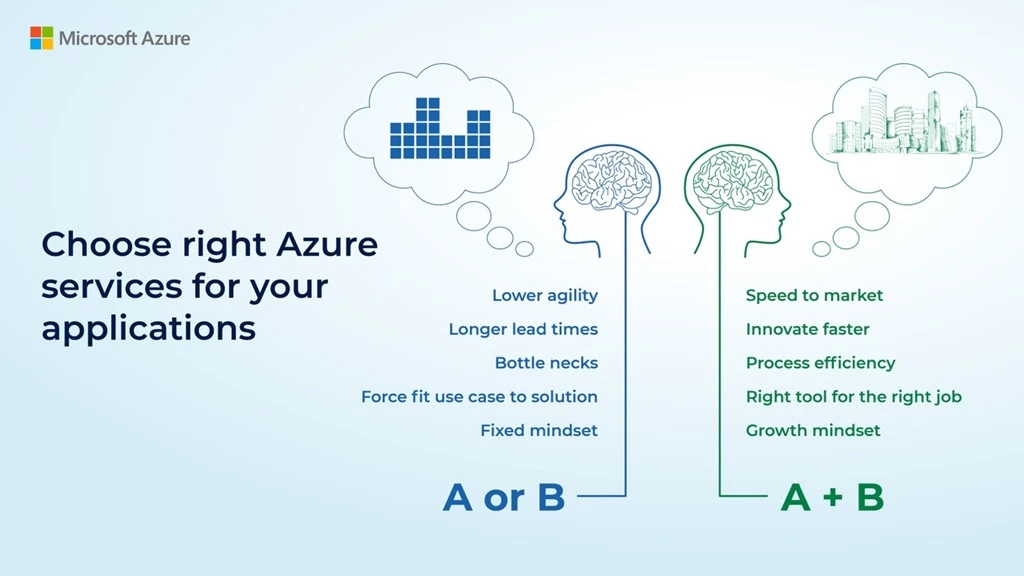
Traditionally, organizations have thought that they must choose between two platforms, technologies, or competing solutions to build and run their software applications. For example, they ask questions like: Do we use Web Logic or WebSphere for hosting our Java Enterprise applications?, Should Docker Swarm be the enterprise-wide container platform or Kubernetes?, or Do we adopt containers or just stick with virtual machines (VMs)? They try to fit all their applications on platform A or B. This A or B mindset stems from outdated practices that were based on the constraints of the on-premises world, such as packaged software delivery models, significant upfront investments in infrastructure and software licensing, and long lead times required to build and deploy any application platform. With that history, it’s easy to bring the same mindset to Azure and spend a lot of time building a single platform based on a single Azure service that can host as many of their applications as possible—if not all. Then companies try to force-fit all their applications into this single platform, introducing delays and roadblocks that could have been avoided.

There’s a better approach possible in Azure that yields higher returns on investment (ROI). As you transition to Azure, where you provision and deprovision resources on an as-needed basis, you don’t have to choose between A or B. Azure makes it easy and cost-effective to take a different—and better—approach: the A+B approach. An A+B mindset simply means instead of limiting yourself to a predetermined service, you choose the service(s) that best meet your application needs; you choose the right tool for the right job.

Figure 1: Comparison of A or B (fixed mindset) thinking vs. A+B (modular) thinking when it comes to choosing the best apps in Azure for modernization.

Figure 1: Azure enables you to shift your thinking from an A or B to an A+B mindset, which has many benefits.

With A+B thinking, you can:

  • Select the right tool for the right job instead of force-fitting use cases to a predetermined solution.
  • Innovate and go to market faster with the greater agility afforded by the A+B approach.
  • Accelerate your app modernizations and build new cloud-native apps by taking a modular approach to picking the right Azure services for running your applications.
  • Achieve greater process and cost efficiencies, and operational excellence.
  • Build best-in-class applications tailored fit for your business

As organizations expand their decision-making process and technical strategy from an A or B mindset to encompass the possibilities and new opportunities offered with an A+B mindset, there are many new considerations. In our new book, we introduce the principles of the A+B mindset that you can use to choose the right Azure services for your applications. We have illustrated the A+B approach using two Azure services as examples in our book; however, you can apply these principles to evaluate any number of Azure Services for hosting your applications–Azure Spring Apps, Azure App Service, Azure Container Apps, Azure Kubernetes Service, and Virtual Machines are commonly used Azure Services for application hosting. A+B mindset applies to any application, written in any language.

Learn more

Asir and Ajai are the authors of a new Microsoft e-book that helps you transition to an A+B mindset and answer the question: “What is the right service for my applications?” Get the Microsoft e-book to learn more about how to transition to an A+B mindset to choose the right Azure services for your applications.

Three reasons to migrate your ASP.NET apps and SQL Server data to Azure

The way we work and live has changed. Over the last several months, enterprises have had to shift their strategy from “physical first” to digital first and accelerate their digital transformation to enable remote productivity, reduce costs, or rapidly address new opportunities. In a digital first world, websites and web applications play a significant role in how customers interact with a business. To make a great first impression, companies are modernizing their web applications and data to the cloud for optimal performance, and saving money along the way.

Nearly a third1 of the world’s public websites are built on ASP.NET, and for good reasons; it’s fast, scalable, and secure. What if you could combine those benefits with the operational and financial benefits of the cloud? Microsoft Azure offers the only end-to-end application hosting platform to build and manage .NET applications, enabling significant cost savings, operational efficiencies, and business agility.

Here are three ways you’ll benefit from migrating your ASP.NET apps and SQL Server data to Azure.

Optimize costs with fully managed services that do more for you

Operating your .NET applications on a fully managed platform allows your teams to focus on what matters most by offloading apps, infrastructure, and data management to Azure. With our deep expertise in Windows, Visual Studio and ASP.NET, we have designed Azure App Service and Azure SQL Database from the ground up for .NET applications and the SQL Server Databases that power them. Simply put, there is no better place to build, host, manage, and scale your .NET applications.

“After having used Azure for the past couple of years, we don’t want to do it any other way, and the capital cost savings were just too compelling.” —Anand Kulanthaivelu, Solutions Architect for autoTRADER.ca

Use the power of built-in AI, with capabilities that surface savings opportunities for you. Azure SQL Database offers automatic tuning and adaptive query optimization to support peak performance. You can break down how increased traffic or upstream dependencies are affecting website response times with rich out of the box monitoring for ASP.NET applications in Application Insights.

Operate confidently with mission-critical performance and security

App Service and SQL Database can help simplify your operations while enabling you to operate confidently to address any business need. With App Service on Windows operating on an Internet Information Services (IIS) server in the backend and SQL Database sharing the same codebase with on-premises SQL Server, your developers and database admins can continue to use their familiar tools and processes to be effective from day one without a steep learning curve.

Azure .NET app hosting platform serves over 2 million websites and processes, 41 billion requests and 9 trillion SQL queries per day. Built-in auto-scaling quickly adapts to meet workload demand from these apps, ensuring that user experiences stay great. Cloud-native technology like Azure SQL Database Hyperscale removes many of the limits seen in other cloud databases, with a flexible storage architecture that grows as needed, up to 100 TB. Both App Service and SQL Database are available in all 60+ Azure regions, enabling you to deploy your applications closer to customers and meet local regulatory compliance needs.

“Hyperscale made it easy for us to support our growing workload and the dozens of microservices that power our core ecosystem.” —Andrew Wieck, Manager of Business Analytics, Clearent

Azure Security Center provides enterprise grade protection for all your Azure resources, so you can monitor all your applications and databases and receive recommendations to improve your security posture and threat protection. Azure SQL Database offers the broadest range of built-in security controls across T-SQL, authentication, networking and key management as well as advanced data security that proactively detects threats and vulnerabilities. You can protect applications with Azure Web Application Firewall, leverage Azure CDN to optimize performance or use Azure Front Door to route user traffic to the lowest latency backend, all while gaining built-in distributed denial of service (DDoS) protection and global load balancing.

“We looked at moving to the cloud for better DDoS protection and lowered cost of operations for our apps. We have successfully migrated 200 apps to Azure, while using the App Service Migration Assistant to migrate 60 different .NET Apps. The Azure Migrate App Service Migration Assistant really simplified our migration journey by identifying any migration blockers and enabling us to migrate apps with just a few clicks. As an App development team, we really like the value proposition of Azure managed services for .NET Apps such as App Service and Azure SQL Database. We don’t have to worry about patching virtual machines or containers.” —Tim Fragakis, Director of Cloud Services, IT, Clover Imaging Group

Accelerate innovation and ship new features faster

Native integration between Visual Studio, GitHub, App Service and CI/CD enable developers to build and ship changes faster. Features such as remote and live-site debugging for ASP.NET apps let developers and operators diagnose issues in production environments and resolve them quickly, without impacting traffic.

Building on Azure opens the door to new features and services that provide off-the-shelf value to accelerate innovation. Developers can easily connect to new data sources and backend systems with 300+ pre-built connectors for Azure Logic Apps. Turn legacy web services into modern REST-based APIs by creating façades with Azure API Management, then innovate with many of the pre-built APIs for Azure Cognitive Services such as Speech, Text and Image processing. Add interactivity to your website with Azure Bot Service to serve customers more efficiently and deliver personalized results faster with Azure Cognitive Search.

Get started today

Azure offers easy-to-use tools with step by step guidance to help you migrate your apps and data quickly and efficiently. Use the Azure App Service Migration Assistant to perform readiness checks on your application and receive a detailed assessment that walks you through the migration process. Azure Database Migration Service provides a step-by-step guide to help you get to the cloud with near-zero downtime from multiple database sources. Go through this Microsoft Learn module for migrating .NET Apps to get a hands-on migration experience.

Learn more about building .NET applications on Azure and view our on-demand webinar to learn more about the tools you can use to migrate those apps to the cloud. For best-practice guidance and access to Azure engineers, consider the Azure Migration Program. If you are a Microsoft Partner, view our recent session at Microsoft Inspire to learn how you can build and grow your .NET Apps Modernization practice.

Optimize the cost of .NET and Java application migration to Azure cloud

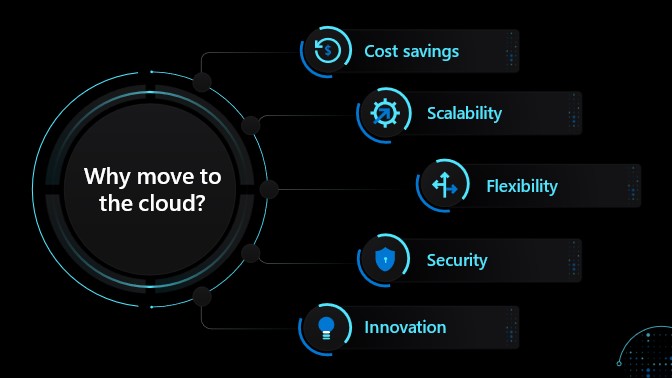
In today’s uncertain economic environment, cost is top of mind for every organization. With uncertain global economic conditions, high inflation rates, and challenging job markets, many businesses are tightening their spending. Yet, companies continue to prioritize substantial budget allocations for digital transformation, especially for the agility, performance, and security gained by migrating applications to the cloud. The reason is simple: investments in cloud translate to positive impacts on the business revenue and significant cost savings.  

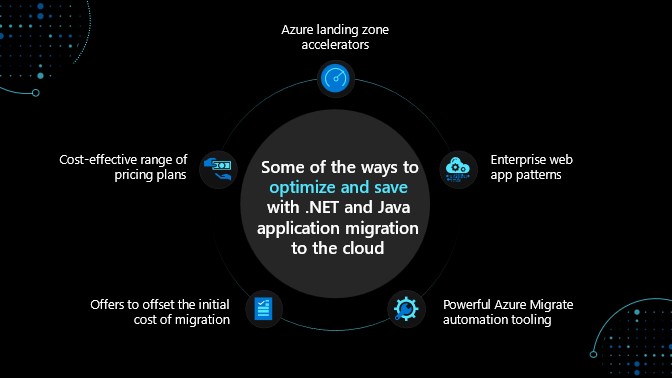
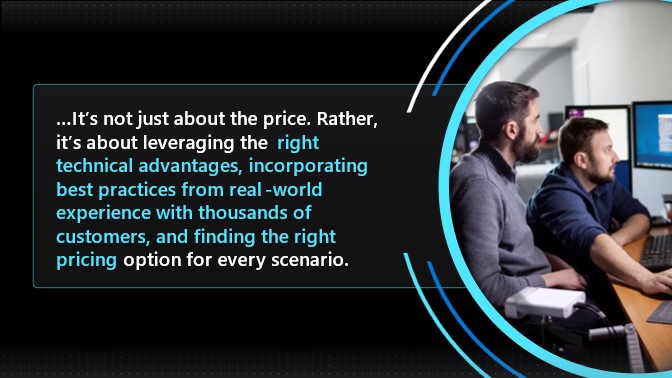
But how do businesses turn this opportunity into reality? In this article, we’ll look at  several levers that Azure provides to help organizations maximize the cost benefits of migrating .NET and Java apps to the cloud. One of the things to note about cost optimization is that it’s not only about the price. There are significant financial benefits to be gained when you leverage the right technical resources, have access to best practices from real-world experiences with thousands of customers, and flexibility of the right pricing option for any scenario. These factors may result in a compelling total cost of ownership (TCO).  

Let’s look at some of these benefits for Azure App Service customers below: 

  • Azure landing zone accelerators
  • Enterprise web app patterns
  • Powerful Azure Migrate automation tooling
  • Offers to offset the initial cost of migration
  • Cost-effective range of pricing plans

Faster time to value with expert guidance through landing zone accelerators  

For cloud migration projects, getting it right quickly from the start sets the foundation for business success and savings. Azure landing zone accelerators are prescriptive solution architectures and guidance that aid IT pros in preparing for migration and deployment of on-premises apps to the cloud.  

Provided at no additional cost and capturing the expert guidance from migrations done with thousands of customers, landing zone accelerators are a compelling differentiator with Azure that help organizations focus on delivering value rather than spend cycles doing the heavy lifting of migration on their own. Based on well-architected principles and industry best-practices for securing and scaling application and platform resources, these resources create tangible cost savings by reducing the time and effort to complete app migration projects.  

Learn more about other landing zone accelerator workloads, and watch the Azure App Service landing zone accelerator demo

Enhance developer skilling with the reliable enterprise web app pattern

The reliable web app (RWA) pattern is another free resource from Azure that is specifically designed to empower developers confidently plan and execute the migration process. It is targeted at both experts in the cloud and developers who may be more familiar with on-premises tools and solutions and taking their first steps in the cloud. Built on the Azure Well-Architected Framework, this set of best practices helps developers successfully migrate web applications to the cloud and establishes a developer foundation for future innovations on Azure. We are pleased to announce that a reliable web app pattern for Java is now available, in addition to the .NET pattern announced at Build.

The reliable web app pattern provides guidance on the performance, security, operations, and reliability of web applications with minimal changes during the migration process. It smoothens the learning curve and greatly reduces the length of the migration project, thereby saving organizations the cost of maintaining on-premises infrastructure any longer. The Azure Architecture Center provides comprehensive guidance, open-source reference implementation code, and CI/CD pipelines on GitHub. Check out the free, on-demand Microsoft Build 2023 session to learn more. 

Accelerate the end-to-end migration journey with free automated tooling  

Costs of tooling and automation are often underestimated during migration projects. Azure Migrate is a free Microsoft tool for migrating and modernizing in Azure. It provides discovery, assessment, business case analysis, planning, migration, and modernization capabilities for various workloads on premises—all while allowing developers to run and monitor the proceedings from a single secure portal. Watch this short demo of the business case feature, and find Azure Migrate in the portal to get started.

Azure Migrate, Azure Advisor, and Azure Cost Management and Billing are components of this migration journey that provide guidance, insights, and the ability to right-size Azure resources for optimal cost-efficiency. 

Offset the initial cost of migration projects with Azure offerings

To alleviate risks and help jumpstart migration with confidence, Azure Migrate and Modernize partner offers are available to customers. It not only helps build a sustainable plan to accelerate the cloud journey with the right mix of best practices, resources, and extensive guidance at every stage, but may also include agile funding to off-set the initial costs.  

With Azure Migrate and Modernize, moving to the cloud is efficient and cost-optimized with free tools like Azure Migrate and Azure Cost Management. Additionally, it supports environmentally sustainable outcomes and drives operational efficiencies, while reducing migration costs through tailored offers and incentives based on your specific needs and journey. Work with your Microsoft partner to take advantage of these offers in your enterprise app migration.  

Benefit from a wide range of flexible and cost-effective plans

Azure App Service is one of the oldest and most popular destinations for .NET and Java app migrations, with over two and a half million web apps and growing fast. It offers a wide range of flexible pricing options to save on compute costs. Azure Savings Plan for Compute is ideal if the flexibility to run dynamic workloads across a variety of Azure services is crucial. Reserved instances are another popular option, providing substantial cost savings for workloads with predictable resource needs. There are various pricing plans and tiers to suit every budget and need—from a new entry-level Premium v3 plan called P0v3, to large-scale plans that support up to 256GB memory. For hobbyists and learners, Azure App Service has one of the most compelling free tiers that continues to attract new developers every day.  

Check out the Azure App Service pricing page and pricing calculator to learn more.  

Learn more

Interested in learning more? Dive deeper into the cost optimization strategies and see how other organizations have optimized their cost of migration with the following papers: 

Follow Azure App Service on Twitter.

The economic benefits of innovating with Azure AI

At Microsoft Build this year our CEO Satya Nadella grounded the excitement surrounding AI back to one simple goal: to better serve unmet user needs. He asked “Why do we build software?” and, in doing so, he reminded us it’s not the technological capabilities of AI tools that make them so valuable, but instead where we apply them and for whom. Great products have always, and will always, be about people, and that’s what’s energizing us most on the Microsoft Azure team right now.

Azure customers are already infusing AI in incredible ways, building next-gen app experiences with cutting-edge innovation from Azure AI services with the backing of Azure’s trusted cloud platform. CarMaxH&R Blockthe NBA, and most recently announced, Mercedes-Benz are putting Azure AI to work to differentiate their respective businesses, and they’re proving how investments in innovation quickly pay themselves forward—even during a challenging economy. When AI-powered apps like the CarMax research tool help us scour online reviews of 4,500 car types in seconds, or NBA CourtOptix serves up insights behind our favorite players’ moves, we see first-hand how our own needs inspire truly remarkable software development.

Even so, some customers that are ready to invest in AI tell us that they need help making the financial case for the tools they need to build great products. That’s why today we’re sharing a new Total Economic Impact™ (TEI) study conducted by Forrester Consulting, which captures the costs and benefits of innovating with Azure AI services over a three-year journey. The report analyzes not just one Azure AI service but the exponential effect of multiple. CarMax, for example, leverages a combination of Azure OpenAI’s Chat GPT, Azure Cognitive Search, and Azure Machine Learning Responsible AI dashboard to design their own data-driven AI solution. When you partner with Azure, you gain access to pre-trained large language models that are enterprise-ready and it’s exciting to see customers combine our products to create their own digital IP with the same building blocks Microsoft trusts for its products.

Bring high-quality AI to market with fast ROI

Grounded in a composite organization, trusted financial model, and interviews with decision-makers across five organizations, our new Forrester study shows how Azure AI services collectively resulted in a 284 percent return on investment. Forrester breaks this big number down into tangible value by category, calculating $12.6 million gains from business growth and $16.1 million gains in spending optimization. Impact of such magnitude doesn’t happen overnight, but it also happens a lot sooner than some organizations might think. With a well-architected cloud foundation, AI can be infused smoothly into all kinds of applications and start automating cumbersome processes fairly fast.

In Forrester’s findings, Azure AI services showed potential payback in less than six months because Azure’s pre-trained models are so accurate and the services integrate well across other Azure and Microsoft Cloud products. Azure AI also offers turnkey services that unblock specific tasks even faster out of the box. Azure Form Recognizer, for example, continues to be incredibly popular because it was purposefully designed to make documents intelligent and searchable. In a single service, it brings together business logic, the orchestration of multiple AI skills, and a UI to support more nimble app deployment.

Above is an executive summary from the Total Economic Impact of Microsoft Azure AI, a study conducted by Forrester Consulting and commissioned by Microsoft in April of 2023.

Start small to move quickly and grow fast

Creating space and resources for technological innovation has never been easy, but it’s what keeps companies competitive through economic headwinds. Lately, what’s been most interesting for me as a B2B marketer is watching my own friends and family members realize the possibilities of AI as we experiment with prompt engineering in the new Bing around a dinner table. It has struck me that AI isn’t in the background anymore; it’s very much at the forefront of how we think about tackling solutions through software and what we as humans expect from digital experiences. The transformative shift of generative AI has all industries reimagining their products and services. In Forrester’s study, Azure AI helped generate revenue from new products, and the value of these compounded in worth year-over-year, generating $3.1 million of revenue growth in year one, then $5.6 million in year two, and $6.9 million in year three. Well-calculated risks are the ones organizations can’t afford not to take, especially when they serve those unmet user needs.

The qualitative interviews Forrester conducted for the study revealed a trend across the five different organizations who participated: using a planful pilot approach produces strong financial results. In aggregate, value was mapped from initial planning, model development, and training with just eight people to an expanded team of 40 data engineers and data scientists. The study itself essentially demonstrates what a startup mentality inside a large organization can do. One retail customer interviewed said something that just stuck with me as we look at the cash flow chart below, they said, “Before, we didn’t have maturity around ML (machine learning). Now that we do, we can move away from a subscription-based tool which is not cheap, and go to a consumption-based tool like Azure, where 100 percent of what we build is an asset [to our organization] …” That’s exactly what innovating with Azure is about: helping you build your own proprietary value in the cloud—unique solutions your competitors can’t buy. 

Above is a cash flow chart from the Total Economic Impact of Microsoft Azure AI, a study conducted by Forrester Consulting and commissioned by Microsoft in April of 2023.

The AI adventure

We often talk about technology as a journey, and in this journey, AI is what gives digital transformation a sense of adventure and purpose again. The cost savings and optimization of cloud computing will continue to fund the magic of AI. It’s all interconnected and when you partner with Azure to build and run AI, that’s how we’ll support your vision and your teams.

Be sure to download the full Forrester study here and contact your Microsoft account team to learn more about how to get started with AI today. All you need is a great business idea. Learn more about Azure AI today.

5 λόγοι για να ενοποιήσετε τις εφαρμογές cloud

Αν αναφέρετε μια επιχειρηματική πρόκληση, πιθανότατα υπάρχει μια εφαρμογή cloud, ή πολλές, που υπόσχεται ότι αντιμετωπίζει το ζήτημα. Οι εφαρμογές cloud ήταν ευλογία για τις μικρές επιχειρήσεις. Δεν χρειάζεται να επενδύετε σε δαπανηρή υποδομή για τη διαχείριση επιχειρηματικών διεργασιών, όπως οι ανθρώπινοι πόροι, η διαχείριση έργων, η λογιστική και η διαχείριση σχέσεων πελατών. Με ένα συνδρομητικό μοντέλο, μπορείτε εύκολα να ξεκινήσετε και πληρώνετε μόνο για αυτό που χρησιμοποιείτε. Ωστόσο, εάν δεν είστε προσεκτικοί, πολλές επικαλυπτόμενες εφαρμογές οδηγούν σε έλλειψη αποτελεσματικότητας και αύξηση του κόστους.

Για πολλές επιχειρηματικές διεργασίες, μπορείτε να επιλέξετε ανάμεσα σε λύσεις που εξειδικεύονται σε μια συγκεκριμένη εργασία και λύσεις που αφορούν μια ολοκληρωμένη διεργασία ή πολλές επιχειρηματικές ανάγκες σε ολόκληρη την εταιρεία σας. Υπάρχουν φορές που μια εστιασμένη εφαρμογή είναι η σωστή προσέγγιση, αλλά είναι σημαντικό να συγκρίνετε τα πλεονεκτήματά της με τα πλεονεκτήματα μίας ενοποιημένης λύσης.

1. Μείωση του κόστους IT

Το πιο προφανές όφελος της ενοποίησης εφαρμογών είναι η οικονομική απόδοση. Αν και είναι αλήθεια ότι οι συνδρομές συνήθως είναι πιο οικονομικές από τη φιλοξενία εφαρμογών εντός της εταιρείας, υπάρχουν επίσης χρεώσεις που σχετίζονται με τις εφαρμογές cloud. Οι περισσότερες επιχειρηματικές εφαρμογές χρεώνουν ένα μηνιαίο ποσό με βάση τον αριθμό των χρηστών ή το μέγεθος του χώρου αποθήκευσης που χρησιμοποιείται. Αυτά τα έξοδα αθροίζονται, ειδικά εάν πληρώνετε για περισσότερες από μία εφαρμογές με παρόμοια λειτουργικότητα.

Μπορεί επίσης να είναι κουραστική η διαχείριση πολλών συνδρομών. Δεν χρησιμοποιούν όλες οι εταιρείες τους ίδιους δείκτες για να προσδιορίσουν το κόστος. Η παρακολούθηση των ποσών που πληρώνετε γίνεται περίπλοκη όταν διαφορετικές ομάδες χρησιμοποιούν διαφορετικές εφαρμογές. Με την ενοποίηση των χρεώσεων, θα έχετε καλύτερη εικόνα όσον αφορά τα στοιχεία που χρησιμοποιεί η εταιρεία σας και το κατά πόσο αξιοποιείτε τις εφαρμογές cloud.

2. Κάνετε περισσότερα πράγματα

Πέρα από το κόστος που σχετίζεται με τις συνδρομές, η χρήση πολλών εφαρμογών μειώνει την παραγωγικότητα. Όπως η εναλλαγή εργασιών γενικά, η μετακίνηση μεταξύ διαφορετικών εφαρμογών είναι χρονοβόρα και δυσκολεύει τους υπαλλήλους σας. Αυτά τα χαμένα λεπτά και οι ώρες συσσωρεύονται με την πάροδο του χρόνου και αποτελούν χρόνο που οι υπάλληλοί σας θα μπορούσαν να χρησιμοποιήσουν σε εργασίες υψηλότερης αξίας. Ακολουθούν μερικά παραδείγματα για τον τρόπο απλοποίησης της εργασίας με την ενοποίηση:

  • Μια ενιαία εφαρμογή για συνομιλίες, κλήσεις και συσκέψεις επιτρέπει στους υπαλλήλους τη γρήγορη εναλλαγή λειτουργιών επικοινωνίας. Για παράδειγμα, εάν τα μέλη της ομάδας πιστεύουν ότι μια συνομιλία δεν βοηθά στην επίλυση κάποιου ζητήματος, μπορούν να ξεκινήσουν μια σύσκεψη με όλους τους συμμετέχοντες στη συνομιλία, με το πάτημα ενός κουμπιού.
  • Κατά την εργασία σε ένα μόνο έργο, οι υπάλληλοί σας μπορεί να χρειαστεί να επικοινωνήσουν με ένα συνάδελφο, στη συνέχεια, να συνεργαστούν σε ένα έγγραφο και μετά να αναθεωρήσουν ένα χρονοδιάγραμμα έργου, όλα αυτά μέσα σε λίγες ώρες. Η ολοκλήρωση αυτών των εργασιών είναι πολύ πιο απλή εάν όλες οι εφαρμογές είναι προσβάσιμες σε μία ενιαία πλατφόρμα, όπως το Microsoft Teams.
  • Εάν οι πληροφορίες βρίσκονται σε μία ενιαία πλατφόρμα, οι υπάλληλοι δεν θα χάνουν χρόνο ανοίγοντας πολλές διαφορετικές εφαρμογές για να βρουν αυτό που αναζητούν.

3. Απλοποίηση της τεχνολογίας

Οι εφαρμογές cloud είναι πιο απλές στη ρύθμιση σε σύγκριση με τις λύσεις εσωτερικής εγκατάστασης, αλλά αυτό δεν σημαίνει ότι δεν απαιτούν ενασχόληση. Κάποιος, συνήθως το IT, πρέπει να τις συντηρεί. Αυτό μπορεί να περιλαμβάνει την προσθήκη και την κατάργηση χρηστών από εφαρμογές καθώς αλλάζουν οι ρόλοι τους στην εταιρεία σας, την ενοποίηση εφαρμογών με άλλα συστήματα, όπως μια λύση διαχείρισης πρόσβασης ταυτοτήτων και την αντιμετώπιση των προβλημάτων που έχουν οι υπάλληλοί σας με το λογισμικό σας.

Έχοντας λιγότερες εφαρμογές για υποστήριξη, θα αποδεσμεύσετε το IT ώστε να αφιερώνει περισσότερο χρόνο σε μεγαλύτερες πρωτοβουλίες που θα δώσουν ώθηση στην επιχείρησή σας.

Ενοποίηση εφαρμογών για μείωση του κόστους

Μάθετε τα δύο στοιχεία που προκαλούν μείωση του κόστους και κάντε μια αυτοαξιολόγηση για να δείτε αν ο οργανισμός σας είναι έτοιμος για απλοποίηση και βελτιστοποίηση.Μάθετε περισσότερα

4. Πρόσβαση σε καλύτερες πληροφορίες

Τα δεδομένα είναι ένας από τους μεγαλύτερους πόρους της επιχείρησής σας. Για να κατανοήσετε ποιοι είναι οι καλύτεροι πελάτες σας, να αποκαλύψετε τις τάσεις πωλήσεων και να διαχειριστείτε τις προκλήσεις παραγωγής, απαιτείται ανάλυση δεδομένων. Ωστόσο, εάν τα δεδομένα των πελατών, οι οικονομικές πληροφορίες και ο σχεδιασμός έργων είναι μοιρασμένα σε πολλές εφαρμογές, ίσως να χάνετε σημαντικές πληροφορίες.

Ενοποιώντας εφαρμογές σε μία ενιαία λύση ή μια οικογένεια καλά ενσωματωμένων εργαλείων επιχειρηματικής ευφυΐας, είναι ευκολότερο για τα άτομα να αναλύουν δεδομένα σε ολόκληρη την εταιρεία σας και να ανακαλύπτουν βασικές πληροφορίες που σας βοηθούν στη λήψη πιο έξυπνων αποφάσεων. Για παράδειγμα, εάν η ομάδα σας έχει εύκολη πρόσβαση στα δεδομένα πελατών από όλα τα σημεία επαφής του κύκλου ζωής του πελάτη, μπορεί να προβλέψει τις ανάγκες και να προσφέρει καλύτερη εξυπηρέτηση. Η σύνδεση των δεδομένων πωλήσεων με τα δεδομένα χρήσης των υπαλλήλων μπορεί να σας βοηθήσει να κατανοήσετε πώς μπορείτε να είστε πιο αποτελεσματικοί με τους πόρους σας. Επιπλέον, πολλές πλατφόρμες εμφανίζουν σημαντικούς δείκτες που μπορείτε να εξετάσετε με μια ματιά.

5. Ενισχυμένη ασφάλεια

Στον σημερινό κόσμο, κάθε συσκευή, λογαριασμός χρήστη και εφαρμογή αποτελεί ένα πιθανό σημείο εισόδου για εισβολείς που θέλουν να κλέψουν δεδομένα ή να διαταράξουν με κάποιον άλλο τρόπο την επιχείρησή σας. Η χρήση εφαρμογών από πολλούς διαφορετικούς προμηθευτές ενέχει μεγαλύτερο κίνδυνο παραβίασης ασφαλείας, επειδή πολλά άτομα χρησιμοποιούν ξανά τον ίδιο κωδικό πρόσβασης σε πολλούς λογαριασμούς. Αν ένας λογαριασμός παραβιαστεί, οι εισβολείς μπορούν να χρησιμοποιήσουν αυτές τις πληροφορίες για να αποκτήσουν πρόσβαση σε άλλους λογαριασμούς, συμπεριλαμβανομένου του εταιρικού σας δικτύου.

Μειώνοντας τον αριθμό των εφαρμογών που χρησιμοποιεί η ομάδα σας, απλοποιείτε την ασφάλεια. Όταν οι υπάλληλοι χρησιμοποιούν έναν μόνο λογαριασμό για να έχουν πρόσβαση σε πολλές εφαρμογές, μπορείτε να εφαρμόζετε τα ίδια στοιχεία ελέγχου ασφάλειας σε όλες τις εφαρμογές τους. Επίσης, με λιγότερες εφαρμογές για παρακολούθηση, είναι πιο πιθανό να εντοπίζετε περιστατικά ασφαλείας προτού κάνουν πραγματική ζημιά στην εταιρεία σας.

Πώς μπορείτε να μάθετε εάν έχετε πάρα πολλές εφαρμογές

Η εύρεση και η χρήση πολλών εφαρμογών cloud είναι εύκολη. Στην πραγματικότητα, ενδέχεται να μην γνωρίζετε όλες τις εφαρμογές που χρησιμοποιεί η εταιρεία σας. Ωστόσο, ακόμα και εάν έχετε επιλέξει σκόπιμα εφαρμογές για την εταιρεία σας, ενδέχεται να υπάρχουν ακόμα ευκαιρίες για ενοποίηση. Ορισμένες ενδείξεις ότι η επιχείρησή σας χρησιμοποιεί πάρα πολλές εφαρμογές είναι οι εξής:

  • Τα τμήματα ή οι ομάδες έργων χρησιμοποιούν διαφορετικές εφαρμογές που εκτελούν παρόμοιες λειτουργίες. Για παράδειγμα, εάν η ομάδα μάρκετινγκ μοιράζεται αρχεία χρησιμοποιώντας το Microsoft OneDrive, ενώ η ομάδα ανάπτυξης προϊόντων χρησιμοποιεί το Box.
  • Τα μέλη ομάδας χρειάζεται να πραγματοποιούν τη λήψη δεδομένων από ένα σύστημα και την αποστολή από ένα άλλο, για να ολοκληρώσουν την εργασία τους. Για παράδειγμα, η ομάδα πωλήσεων μπορεί να χρειάζεται να εισάγει πληροφορίες πελατών από ένα εργαλείο παρακολούθησης πωλήσεων σε ένα εργαλείο διαχείρισης έργων, αφού κλείσετε μια πώληση.
  • Οι σημαντικές πληροφορίες είναι διασκορπισμένες σε πολλά διαφορετικά εργαλεία, με αποτέλεσμα οι υπάλληλοι να χρειάζεται να κάνουν αναζήτηση σε πολλές εφαρμογές για να βρουν αυτό που χρειάζονται.
  • Η έλλειψη ορατότητας σε ολόκληρη την επιχείρησή σας καθιστά δύσκολη τη διαμόρφωση της μεγάλης εικόνας για το τι συμβαίνει σε σχέση με όλα τα έργα, τους πόρους και τα έσοδα.

Οι εφαρμογές cloud βοηθούν εσάς και την ομάδα σας να εργάζεστε από οπουδήποτε. Ωστόσο, οι πάρα πολλές εφαρμογές μπορεί επίσης να μειώνουν την αποτελεσματικότητά σας. Για να βελτιώσετε την ασφάλεια, την παραγωγικότητα και τη διαχείριση κόστους, ρίξτε μια ματιά στις ολοκληρωμένες λύσεις για να δείτε εάν υπάρχουν ευκαιρίες για να μειώσετε τον αριθμό των εφαρμογών που η ομάδα σας χρειάζεται να εναλλάσσει καθημερινά. Εναλλακτικά, αποκτήστε μια πιο λεπτομερή ανάλυση σχετικά με την ενδεχόμενη εξοικονόμηση κόστους από την ενοποίηση εφαρμογών και κάντε μια αυτοαξιολόγηση για να προσδιορίσετε εάν η απλοποίηση του οικοσυστήματος εφαρμογών σας είναι κατάλληλη για την επιχείρησή σας.

Μάθετε από τους προγραμματιστές: Κοινή χρήση φωτογραφιών σε έναν κόσμο κοινωνικής δικτύωσης

Ο πυρήνας των μέσων κοινωνικής δικτύωσης είναι η κοινή χρήση πληροφοριών και ιδεών. Επίσης, αν λάβουμε υπόψη τα δισεκατομμύρια ατόμων που χρησιμοποιούν μέσα κοινωνικής δικτύωσης σε τακτική βάση, είναι ασφαλές να πούμε ότι το σύγχρονο άτομο θέλει να μοιράζεται, σε μεγάλο βαθμό.

Δείτε ορισμένες από αυτές τις συνήθεις πλατφόρμες για παράδειγμα. Στη διάρκεια μιας συνηθισμένης ημέρες, αναμένεται ο εξής αριθμός συμμετεχόντων:

  • Facebook: 1,37 δισεκατομμύρια ενεργοί χρήστες
  • Twitter: 500 εκατομμύρια tweet
  • Instagram: 94 εκατομμύρια φωτογραφίες και βίντεο

Ένα νέο είδος κοινωνικής κινητοποίησης

Οι κοινωνικές επαφές είναι έμφυτο χαρακτηριστικό των ανθρώπων, επομένως δεν θα πρέπει να αποτελούν έκπληξη η απήχηση και ο αντίκτυπος των κοινωνικών δικτύων που βλέπουμε σήμερα. Εκτός από τις κοινωνικές φιλοδοξίες, ένας συνεχώς αυξανόμενος αριθμός ανθρώπων έχει ένα πολύ ισχυρό εργαλείο κοινωνικής δικτύωσης στην τσέπη του, με τη μορφή ενός κινητού τηλεφώνου. Περισσότεροι από 9 στους 10 Αμερικανούς ενήλικες έχουν κινητά τηλέφωνα. Τα smartphone, στις τυπικές δυνατότητες των οποίων περιλαμβάνονται η σύνδεση στο Internet και οι εφαρμογές για κινητές συσκευές, είναι ένας από τους πιο συνηθισμένους τρόπους με τους οποίους δημιουργούμε κοινωνικές επαφές. Επιπλέον, μία από τις πιο σημαντικές δυνατότητες ενός smartphone όσον αφορά την κοινωνική δικτύωση είναι η κάμερα.

Στις κάμερες οφείλεται μια σημαντική ποσότητα του περιεχομένου που μοιράζεται. Το 2013, το Facebook ανέφερε ότι ο αριθμός των φωτογραφιών που αποστέλλονται καθημερινά στην πλατφόρμα ήταν 350 εκατομμύρια. Μέσα σε λίγα μόνο χρόνια, το smartphone εφοδίασε εκατομμύρια χρήστες με ψηφιακές κάμερες αλλά και έδωσε τη δυνατότητα στα άτομα να μοιράζονται αυτές τις φωτογραφίες με ευκολία.

Η κοινή χρήση φωτογραφιών είναι ένα βασικό στοιχείο των πιο επιτυχημένων κοινωνικών δικτύων. Η αρχική μορφή του Facebook ήταν ουσιαστικά ένα άλμπουμ φωτογραφιών και παρόλο που το εύρος του έχει επεκταθεί από τότε, οι φωτογραφίες είναι ακόμη ο κύριος τύπος περιεχομένου στο δίκτυο.

Το 2012, το Facebook απέκτησε την υπηρεσία κοινής χρήσης φωτογραφιών Instagram. Σε αντίθεση με τα άλλα δίκτυα, το Instagram αρχικά επικεντρωνόταν αποκλειστικά στη φωτογραφία. Μέσα από την εφαρμογή, οι χρήστες μπορούσαν να αποστείλουν μεμονωμένες φωτογραφίες. Κάθε χρήστης μπορούσε να ακολουθήσει άλλους λογαριασμούς και αυτές οι φωτογραφίες εμφανίζονταν σε μια τροφοδοσία με χρονολογική σειρά. Σε μόνο δύο χρόνια, αυτή η απλή ιδέα για την κοινή χρήση πληροφοριών έκανε το Instagram μια εταιρεία του ενός δισεκατομμυρίου δολαρίων.

Στις δημοφιλείς τοποθεσίες κοινής χρήσης φωτογραφιών, δεν είναι καθόλου ασυνήθιστο να υπάρχουν χρήστες που ακολουθούν μια ευρεία γκάμα λογαριασμών που εμπίπτουν σε διαφορετικές κατηγορίες. Στην ίδια τροφοδοσία, οι χρήστες μπορούν να δουν βραβευμένες φωτογραφίες του National Geographic, τι έφαγε ο γείτονας για πρωινό σήμερα το πρωί και μια συλλογή από φημισμένες γάτες. Υπάρχουν άτομα που έχουν αναπτύξει με επιτυχία τα εμπορικά τους σήματα μέσω εφαρμογών κοινής χρήσης φωτογραφιών. Αυτή είναι η δύναμη της φωτογραφίας.

Ξεκινήστε γρήγορα την επιχείρησή σας με ένα ταχύρρυθμο μάθημα στο Microsoft 365

Δώστε τη δυνατότητα στην ομάδα σας να είναι παραγωγική κάθε μέρα, από σχεδόν οπουδήποτε, με το Microsoft 365. Μάθετε περισσότερα

Οι φωτογραφίες έχουν ένα μεγάλο πλεονέκτημα σε σχέση με τη γλώσσα. Ενώ οι γλώσσες πρέπει να μεταφραστούν για να φτάσουν στο παγκόσμιο κοινό, οι φωτογραφίες δεν χρειάζονται κάτι τέτοιο. Είναι μία από τις πιο κατανοητές μορφές επικοινωνίας σε παγκόσμιο επίπεδο, αν όχι η πιο κατανοητή.

Η κοινή χρήση φωτογραφιών έχει επίσης εξελιχθεί σε μια εμπειρία συνεργασίας. Σε πολλές πλατφόρμες, οι χρήστες έχουν τη δυνατότητα να δημιουργούν δημόσια ή ιδιωτικά άλμπουμ στα οποία μπορούν να προσθέτουν φωτογραφίες άλλοι συμμετέχοντες. Αυτοί οι συμμετέχοντες μπορεί να είναι φίλοι, μέλη της οικογένειας ή εντελώς άγνωστοι και η εμπειρία κοινής χρήσης φωτογραφιών δεν περιορίζεται μόνο σε μεμονωμένα άτομα.

Το λιγότερο δεν είναι πάντα περισσότερο

Αν και οι εφαρμογές όπως το Instagram έχουν φυσικά την τάση να διατηρούν την ποιότητα μέσω σχετικών οδηγιών, τα άτομα έχουν τη δυνατότητα να τραβούν όσες φωτογραφίες θέλουν. Η χωρητικότητα αποθήκευσης στα κινητά τηλέφωνα μπορεί να είναι επαρκής, αλλά υπάρχουν και πολλές επιλογές χώρου αποθήκευσης στο cloud που επιτρέπουν στους χρήστες να έχουν έναν φαινομενικά άπειρο προσωρινό χώρο αποθήκευσης φωτογραφιών. Το Microsoft OneDrive είναι μια διαδεδομένη λύση που επιτρέπει στους χρήστες να αποθηκεύουν όλες τις φωτογραφίες τους, να τις οργανώνουν σε άλμπουμ και να μοιράζονται τις αγαπημένες τους. Δεν χρειάζονται πλέον μεγάλα συνημμένα ηλεκτρονικού ταχυδρομείου ή μονάδες flash, απλώς στείλτε μια σύνδεση μέσω ηλεκτρονικού ταχυδρομείου, μηνύματος κειμένου, iMessage ή Facebook.